
Market experts believe the retreat is because of uncertainty.

There, however, has been an improvement in operating margins.


India is its second-biggest market in terms of geographical presence

Tech major's shareholders will receive total dividend of Rs 15,474 crore in FY15

For equity investors, the risk-to-reward ratio is worsening.

If companies manage to raise Rs 10,000 crore, this will be the best year for IPOs since FY11.

It was a year of big gains for equity investors.

Corporates' forex borrowings have grown at a CAGR of 15.6% since 2008.

Corporate India at present is more indebted than all state govts put together.

Through the past 12 months, the Bank Nifty has risen 55%

Asset managers are betting big on ETFs these days.

Dilip Shanghvi founded Sun Pharma in 1983.
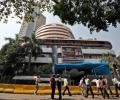
Stock prices is due to valuation expansion

Sun Pharma's Dilip Shanghvi is India's richest person.

BJP loss could trigger a correction
.jpg)
CIL aims to sell 12.6 mn shares to retail investors

After his previous visit, the Sensex crashed and it took four painful years to top the 21,000 mark.

HUL, UltraTech, Asian Paints, L&T, HDFC Bank top global valuation charts

Sales expansion also down 4.4%
 © 2026 Rediff.com - Advertise with us - Disclaimer - Privacy Policy - Sitemap - Feedback - About us - Terms of use - Grievances